About thisfrenzy

poet, translator, activist, editor, book seller, dyke, feminist, tattooed, reviewer, explorer, worrier, word lover, rambler

NaPoMo 2013 – my opening salvo – On poetry and transformation

I have a deadline to meet later this week, 500-700 words on “why poetry is transformative.” Here’s my start:

On Poetry and Transformation

Words don’t flow from meaning—meaning flows from words. Shift a syllable here or there, free a phoneme, dare to let the music choose its own lyrics, and what you know and what you feel veer out of the orderly lines and dart across the border beyond which There Be Dragons.

And honest poetry is the language of dragons translated into human tongues, or how human tongues speak Dragon.

Or maybe poetry is the place where I get to be a dragon.

Or poetry is what my Dragon-self and I create together, turning words into fire and flight.

As a poet, I try to turn experiences and emotions that exist outside of language into songs my people can sing. Like how I started this small essay a few inches above this line, determined to be smart and profound and deep, to craft carefully each syllable, until lines led to across led to border led to beyond which led (through a childhood soaked in fantasies of escape) to Dragons and now here I am, no longer a poet but a vast leather-winged beast with a voice that shatters stone walls and breath that burns walled cities to ash.

There is in every poet such as beast as mine—my Dragon-self, nostrils flaring, smells friend worth dying for or foe worth the fight. Most I think sport wings and armor or claws large as tree roots or eight sets of legs to dance an army off a cliff.

And for all of us poetry is our compromise between destroying the world and loving it. Or is the power of destruction transformed into love. Or love translated into the power to destroy.

A poem that is only what it seems to be is not poetry. Nothing is poetry until you catch a scent that makes you shiver, until what your brain reads and what your body knows diverge, until you catch out of the corner of your eye a shadow that strikes the nerve that knows you might yet be prey.

If at the end of a poem you are who you were when you started the poem you have not dared to dwell in poetry, nor dared to let poetry dwell in you.

A poem for Good Friday

A poem for Good Friday, from Shez, a Jewish Israeli lesbian-feminist poet and one-time punk rocker. The translation is my own.

Only I know what’s in Jesus’ underwear
I was with him just yesterday—
on his last night—
I didn’t laugh
I wasn’t surprised when
I lowered his underwear
I sucked I licked I slid in, pushing
I blew hard I breathed deep and
all shook up I shouted:
“Woman! Bestow upon me your beauty
your compassion, your grace
Dowse me in your passion
your tenderness, your womb”

Women Write Resistance is Out!

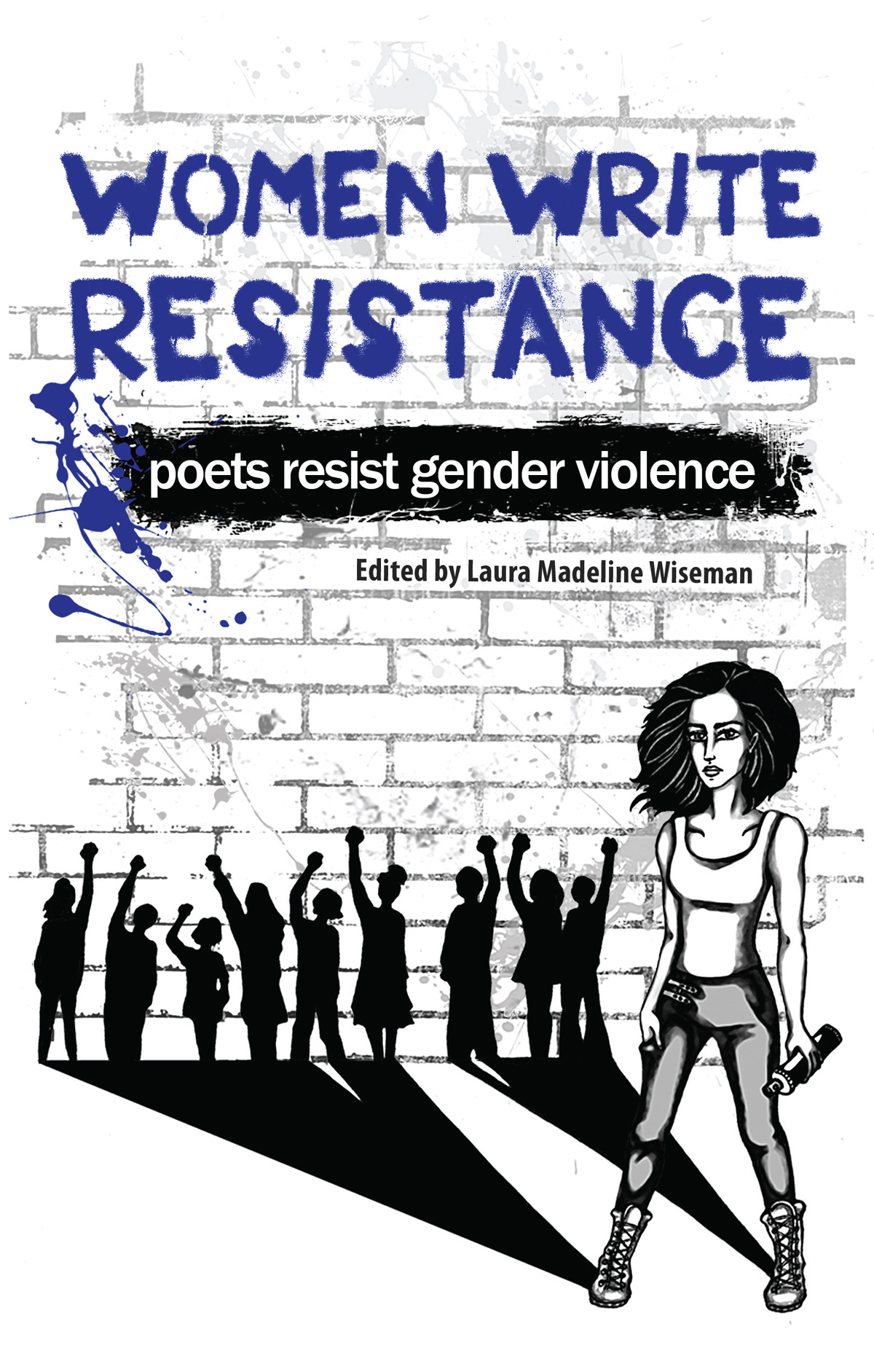
Two sections of my long poem “Wanting A Gun” are included in the new anthology Women Write Resistance: Poets Resist Gender Violence

Women Write Resistance

Women Write Resistance

Readings by local authors from the anthology are springing up all across the country—stay tuned for information about upcoming events in Philadelphia!

Meanwhile, you watch a clip of poet Barbara Salvatone reading the two sections of “Wanting a Gun” here:

Back to translating!

I’m trying to ease back into the arduous process of translating. Gently, one poem at a time, which pretty much means one word at a time then one line at a time then one stanza at a time and then, with any luck, one poem.

Here’s a first pass at a literal translation of one of Shez’s poems from “Dance of the Lunatic” that I didn’t have time to include in my MFA manuscript:

The Car

My dead come quietly to the tombstone rocks above my body

Sometimes they take a tea break and sit above my body drinking
in an orderly fashion
Sometimes they deviate from the rules
and one of them kills a cigarette
not during an intermission

For years they’ve promised me a car,
not large, not new, not fast,
and they do so again tonight

I feel already how I through landscapes rocky
am flying at fifty miles an hour

Watch a Poem Grow! February 2013 “another day another woman’s body”

Draft 2

Another day, another woman’s body found
bound, it’s reported, and strangled and set ablaze.

Bound, it’s reported, sharpening the gruesome details
with every repetition, adding next the rope around the neck

and after the rope around the neck the report that
the body was still smoldering when the dog walker found it.

The body, the it, that the dog walker found while looking for
the woman, the woman who had had a life,

the woman who had had a life and a dog, and a dog walker
whose own life will never be the same

for whose life could be the same after going to meet a woman
and finding a body strangled and bound and burned?

Switch gears—whose life could be the same after going to meet a woman
and leaving behind a body strangled and bound and burned?

He strangled her, he reported, and then bound her body
and set it ablaze but he didn’t mean to he just snapped.

Watch a Poem Grow! February 2013 “another day another woman’s body”

Draft 1

Another day, another woman’s body found
bound, they report, and strangled and set ablaze.

Bound, they report, sharpening the gruesome details
with every repetition, adding the rope around the neck

and with the rope around the neck they add
that the body was still smoldering when the dogwalker found it.

The body, the it, that the dogwalker found while looking for
the woman, the woman who had had a life,

the woman who had had a life and a dog, and a dogwalker
whose own life will never be the same

for whose life could be the same after going to look for a woman
and finding a body strangled and bound and burned?

Strangled, bound, burned—how the pornography of violence
substitutes the description of the body for the depth of the life,

how the details of the body’s death become more glamorous than the life,
how the news staff knows the ratings will spike with certain lead-ins,

how certainly the lead-in body bound ablaze stay tuned will spike
interest in seeing what pictures might follow. Admit it, aren’t you curious?

Curious, how we learned to want to see the pictures, how after the camera
came along we learned to require photographic evidence of our bodies

The Narrative of Love: Readings by Angel Hogan, Nathen Wurzel and Elliott batTzedek Sat. 2/16 7 pm

The Narrative of Love: Readings by Angel Hogan, Nathen Wurzel and Elliott batTzedek.

Love is kind. Love is plain. Love is eloquent. Love is hard. Love is soft. Love is queer. Love is universal. Love is all encompassing. Love is stronger than death. We’re celebrating love in all forms.

Join us at iMPeRFeCT Gallery in Germantown for a selection of stories, poems, and narrative from three Philly writers that create out of love.

Where: iMPeRFeCT Gallery, 5601 Greene Street, 19144 (Germantown)
When: Saturday, February 16, 2013, 7:00pm

Feel free to bring drinks, snacks to share

Now showing in the Gallery:

Gays in the Military: How America Thanked Me

January 21. 2013, Philadelphia (Germantown), PA: IMPeRFeCT Gallery is thrilled to announce the exhibition, Gays in the Military: How America Thanked Me, featuring photographs by renowned New York-based photographer, Vincent Cianni. This exhibition will be on view from February 6 through March 2, 2013 at iMPeRFeCT Gallery, 5601 Greene Street, in the Germantown neighborhood of Philadelphia. The opening reception is on Saturday, February 9, from 6:00 – 9:00pm.

For this series of photographs, Gays in the Military: Or How America Thanked Me, Cianni set out to explore how many lives had been affected due to homophobia in the military.” The resulting images are engaging and honest portrayals of patriotic people dedicated to serving a country that openly discriminates against them. Since Cianni began this work, the “don’t ask, don’t tell” policy has been repealed, but with these photographs Cianni shows us that the lasting effects of homophobia, discrimination, dishonorable military discharge, and a history of harassment and discrimination continue to have striking impact in his subjects’ lives.

Cianni has interviewed and photographed over seventy service men and women from all ranks and departments of the United Stated military. In 2010, he spent six weeks on the road compiling oral histories and making portraits of his subjects. His photographs are straight-forward and documentary in style, typically showing subjects in their homes, and surrounded by the everyday accumulations of living. These frank and familiar depictions allow the viewer to enter into the story; after all, the people in these portraits could be anyone’s sister, uncle, or father. Cianni makes photographs that resonate and draw people together. He records the lives of individuals at the same time that he reveals and documents a significant episode in the history of the United States.

Vincent Cianni graduated from Penn State University, the Maryland Institute College of Art, and SUNY New Paltz. He teaches photography at Parsons The New School of Design, NYC. He currently lives in Newburgh, NY. His documentary photography has been exhibited throughout the country in major museums including the Philadelphia Museum of Art. A major survey of his work was exhibited at the Museum of the City of New York in 2006. His work is archived at Duke University’s Rare Books, Manuscripts and Special Collections Library.

###

iMPeRFeCT Gallery
5601 Greene Street, Philadelphia, PA 19144
imperfectgallery.com

You can’t get it right, so the only thing you can do is make it better.

January 28, 2013, 9:00 pm
The Treachery of Translators

By ANDY MARTIN
The fact is, there were always going to be a lot of fish in “Vingt mille lieues sous les mers.” When a publishing house commissioned me to produce a new translation of Jules Verne’s 19th-century underwater epic, I was confident of bringing a degree of joyous panache to the story of Captain Nemo, his submarine, the Nautilus and that giant killer squid. But I had forgotten about its systematic taxonomy of all the inhabitants of the seven seas.

Somewhere around page 3 of “Twenty Thousand Leagues Under the Sea,” I got this feeling that I was starting to drown in fish. There are an awful lot of fish down there, and there were possibly even more in the middle of the 19th century. Whereas my ichthyological vocabulary, whether in French or English or indeed any other language, was severely limited. The fish (and assorted oceanic mammals), in other words, far outnumbered my linguistic resources. I now know I should just have boned up on fish, the way any decent, respectable translator would have done.

(Note to the decent, respectable translator: I teach a college class on translation but I accept your critique that I am long on theory and short on practice.)

Instead I started counting how many pages there were and calculating how much I was getting paid per fish. It didn’t add up. I realize now that I should have switched to “Around the World in Eighty Days” – there are far fewer fish in that one.

My brilliant translating career hit another high when a French publisher invited me to translate Brigitte Bardot’s memoirs, “Initiales BB.” I had written a memoir about my childhood obsession with Bardot, so I said O.K. and suggested some modest revisions. It would have to be completely re-written from top to bottom and I would definitely take out all those exclamation marks. And I would put back in that affair with the English guy after she married Gunter Sachs – she should never have left that out! They took that as a “non.” Tant pis. All translators rewrite and rectify. Some even feel that they can do a better job of writing Bardot’s life than Bardot.

The law of karma is as unforgiving in the realm of translation as in any other and I was overdue for a taste of my own punishment. I had written a book about surfing in Hawaii called “Walking on Water,” which was eventually translated into Dutch. I had nothing to do with the translation and was simply presented with a fait accompli. My command of Dutch is negligible, but I thought I would test out “Lopen over water” by reference to a metaphor that was, if not my greatest contribution to literature, at least distinctively my own. There was a passage where I was drowning, but not feeling too put out about it, and I had written: “Death was warm and embracing like porridge.” I zeroed in on the sentence, but I couldn’t find anything even closely related to porridge. So I checked with a Dutch-speaking friend – could she tell me how the translator had done it?

“You’d better sit down,” she said.

The translator had not given my immortal metaphor the time of day. He had the same kind of hang-up about porridge that I had about fish. He took a shortcut right round it, passing seamlessly from the previous sentence to the one following. The porridge had not been lost in translation; it had been quite deliberately eradicated.

My first thought was to get on the next plane to Amsterdam and go and knock on his door. Maybe I could find some porridge and fling it in his face. My own transgressions, over the years, have taught me to be more tolerant and understanding. On the other hand, Herman, if you would like to put on gloves and shorts, we can resolve this matter in the ring, anytime.

It may have been this experience that caused me to write an article for a British newspaper titled, “Translation Is Impossible.” I was supposed to be reviewing a bunch of English-French dictionaries, but I happened to cite the classic Groucho Marx joke, which goes (in one of its variants), “You’re only as old as the woman you feel,” as an instance of the untranslatable. At least as far as French is concerned. You need a verb, “feel,” that functions both transitively and intransitively, and means something like “caress” and “my current emotional status” all at once. It doesn’t (so far as I know) exist in French. A couple of months later – inevitably – some friend in Paris sent me “La Traduction Est Impossible,” the French translation of my original article, which had been published in a Paris magazine.

Naturally the first thing I looked for was the translation of the Marxian pun. I was genuinely interested – I really wanted to know how the translator had pulled it off. And to think I had claimed it was impossible – I was about to be proved wrong! But translation is always an interpretation. In this case, the translator had written something like this, updating New York ’50s sexist humor into ’90s Parisian political correctness: “Here is an example of a sentence that is manifestly impossible to translate: ‘A man is only as old as the woman he can feel inside of him trying to express herself.'” So, in some sense, I felt vindicated, but also – as usual – betrayed by a graduate from the school of translation.

In my opinion, you don’t have to be mad to translate, but it probably helps. Take, for instance, the case of the late, great Gilbert Adair. He was translating into English the brilliant novel by Georges Perec, “La Disparition” – a lipogram written entirely without the letter “e.” (I had had a tentative go at eliminating the most frequently occurring letter in both English and French and failed utterly.) Adair even succeeded, for a while, in deleting “e” from his vocabulary. I met him for tea in London, while he was in the midst of it, at the Savoy hotel (it had to be the Savoy, not Claridge’s or the Grosvenor, obviously). When a waitress came around and asked if he would like “tea or coffee,” he frowned, gritted his teeth, and replied, “Lapsang souchong.”

Even his title is genius: “A Void” (think about it: He not only avoided the “e’s” in “The Disappearance,” but he also slipped in a dash of metaphysical angst and a cool play on words). The lesson I learned from Adair, a really serious translator, is this: You can’t get it right, so the only thing you can do is make it better.

Andy Martin is the author of “The Boxer and the Goalkeeper: Sartre vs Camus.” He teaches at Cambridge University.

December 14, 2012

December 14, 2012
Elliott batTzedek

How hard is it not to shoot a child?
How hard to raise up children who will not shoot
children? How hard not to sell exploding bullets and
assault rifles and video-game infomercials? How hard
not to pay for care for the lost and the broken and the crazy before
the SWAT teams and the counselors are called?

Easy, easy, so much easier
than blood that can never be cleared from a classroom, than
knowing “point-blank range” means children saw
his face and knew the hard stone bullets were coming.

A senior in high school when Lennon’s glasses were shattered,
my life since has seen murder after mass murder,
most with masculinity in common,
most with the un-mentionable race,
most with mental illness, too.

But all with guns and guns and guns and guns
and guns and guns and guns.

New Year Resolve by May Sarton

New Year Resolve
May Sarton

The time has come
To stop allowing the clutter
To clutter my mind
Like dirty snow,
Shove it off and find
Clear time, clear water.

Time for a change,
Let silence in like a cat
Who has sat at my door
Neither wild nor strange
Hoping for food from my store
And shivering on the mat.

Let silence in.
She will rarely speak or mew,
She will sleep on my bed
And all I have ever been
Either false or true
Will live again in my head.

For it is now or not
As old age silts the stream,
To shove away the clutter,
To untie every knot,
To take the time to dream,
To come back to still water.

“New Year Resolve” by May Sarton, from Collected Poems 1930-1993. © W.W. Norton & Co., 1993.